
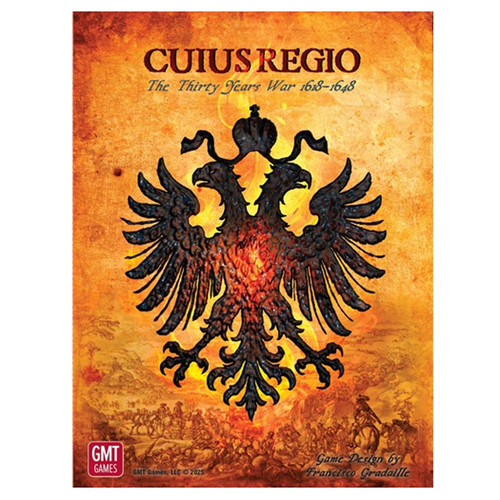
Cuius Regio explores the operational military aspects of this pivotal period in European history and focuses on the maneuvers and battles that shook Europe for three decades.
The Thirty Years War unfolded in four main phases: the Bohemian Revolt from 1618 to 1625, the Danish intervention from 1625 to 1630, the Swedish intervention from 1630 to 1635, and the French intervention from 1635 to 1648. It concluded with the Peace of Westphalia in 1648, which finally established a new status quo in Europe, the concept of the sovereignty of states, and shifted the focus of continental politics from southern Europe to the northern states.
The game’s scenarios reflect the military activity of the European powers who fought in the Holy Roman Empire during this time in pursuit of a range of diplomatic, religious, and political goals. The many military operations had a devastating impact on the economic and social well-being of the people across the continent. In large part this was because the Thirty Years War, particularly in the Holy Roman Empire, was mainly a war of maneuver. Armies moved to gain, or regain, control of territory, influence negotiations, or convert the people. The large numbers of mercenaries and the rudimentary supply systems only enhanced the widespread devastation.
During this period, Europe saw the rise of national armies, artillery became an indispensable part of the battlefield, and pikemen began to disappear. Still, the armies stayed technologically matched as weaponry on both sides advanced at a similar pace. In the end, tactical innovations and leadership made the difference on the battlefield.
